Toyota Electric Mobility Strategy How the Automaker Is Shaping the Future of EVs
Electric Vehicles
|
May 8, 2026
The automotive industry is undergoing one of the biggest transformations in its history as manufacturers move toward electrification. Among global automakers, Toyota has taken a distinctive approach by balancing hybrid technology, plug-in hybrids, battery electric vehicles (BEVs), and future battery innovations. While some competitors have focused exclusively on fully electric vehicles, Toyota has pursued a multi-pathway strategy designed to address different markets, consumer needs, and infrastructure conditions.
Toyota’s electric mobility strategy represents a significant shift from its long-standing reputation as a hybrid pioneer toward a broader electrified vehicle ecosystem. Through investments in battery technology, electric platforms, and manufacturing capabilities, Toyota aims to strengthen its position in the rapidly evolving global EV market while supporting long-term sustainability goals.
Toyota’s Transition Toward Battery Electric Vehicles
For decades, Toyota has been recognized as one of the leaders in hybrid vehicle development. The introduction of the Toyota Prius helped popularize hybrid technology worldwide and demonstrated that electrification could improve fuel efficiency without requiring a complete transition away from traditional powertrains.
However, the rapid expansion of the global EV market has changed the competitive landscape. Automakers worldwide are increasing investments in battery-powered vehicles as governments introduce stricter emissions regulations and consumers show growing interest in zero-emission transportation.
Toyota’s response has been to expand its battery electric vehicle (BEV) strategy while continuing to develop hybrid and plug-in hybrid solutions. This approach allows the company to adapt to different markets where charging infrastructure, energy availability, and consumer preferences vary significantly.
Rather than relying on a single technology pathway, Toyota views electrification as a broad transition that includes multiple vehicle technologies working together toward lower emissions.
Understanding Toyota’s Electrification Strategy: BEVs, HEVs, and PHEVs
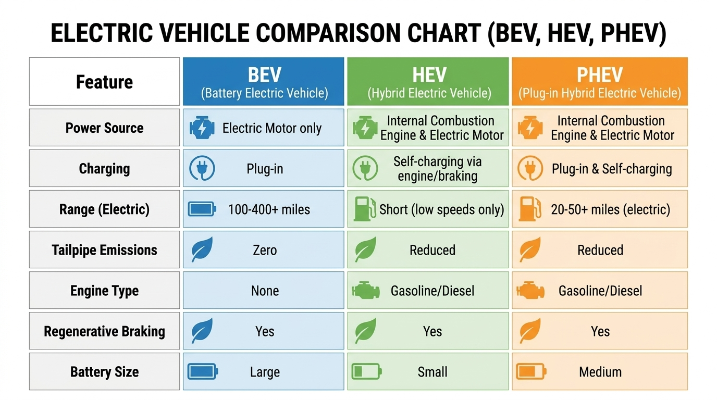
Toyota’s electrified vehicle strategy includes several types of powertrains, each serving different driving needs and market conditions.
Battery Electric Vehicles (BEVs)
Battery electric vehicles are powered entirely by electricity stored in a rechargeable battery. Unlike conventional vehicles and hybrids, BEVs do not use an internal combustion engine and produce no tailpipe emissions during operation.
Key characteristics of BEVs include:
- Fully electric power systems
- Rechargeable battery packs
- Zero tailpipe emissions
- Dependence on charging infrastructure
Toyota’s bZ4X represents the company’s first global mass-market BEV, built to compete in the growing electric SUV segment.
On the other hand, hybrids (HEVs) blend an internal combustion engine with an electric engine, thereby improving fuel efficiency without requiring a charging source. The Toyota Prius is a prime instance of this innovative technology. Plug-in hybrids (PHEVs), such as the Toyota RAV4 Prime, facilitate a dual approach, enabling drivers to employ electric power for shorter trips and gasoline for longer travels, supplemented by the capability to recharge.
Overall, BEVs are integral to minimizing emissions and fostering sustainability and thus form a crucial part of Toyota's future portfolio.
Hybrid Electric Vehicles (HEVs)
Hybrid electric vehicles combine a gasoline engine with an electric motor. Unlike BEVs and PHEVs, traditional hybrids do not require external charging because the battery is replenished through regenerative braking and engine operation.
Toyota’s hybrid technology remains a major part of its global electrification strategy because it provides improved fuel efficiency while requiring minimal changes to consumer driving habits.
Popular Toyota hybrid models have demonstrated that electrification can expand beyond fully electric vehicles.
Plug-in Hybrid Electric Vehicles (PHEVs)
Plug-in hybrid electric vehicles combine characteristics of both BEVs and traditional hybrids. They feature larger batteries that can be charged externally, allowing drivers to complete shorter trips using electric power before switching to gasoline operation.
PHEVs provide flexibility for consumers who want electric driving capability but still require the convenience of long-distance fuel availability.
Toyota’s Current Battery Electric Vehicle Development
Toyota’s BEV expansion is centered around developing electric vehicles that combine efficiency, reliability, and practicality.
Toyota bZ4X: Toyota’s First Dedicated Global BEV
The Toyota bZ4X represents an important milestone in Toyota’s transition toward fully electric vehicles. As part of the company’s Beyond Zero (bZ) series, the electric SUV demonstrates Toyota’s approach to combining zero-emission driving with everyday usability.
The bZ4X focuses on several areas that are important for EV adoption:
- Practical electric range for daily driving
- Available all-wheel-drive capability
- Advanced safety technologies
- Connected vehicle features
By entering the competitive electric SUV market, Toyota aims to attract drivers who value both sustainability and the reliability associated with the brand.
Lexus Electric Expansion
Toyota’s luxury brand Lexus is also expanding its electric vehicle portfolio. Lexus electric models focus on premium design, advanced technology, and refined driving experiences.
The development of Lexus BEVs highlights Toyota’s broader electrification strategy across different market segments, from mainstream vehicles to luxury transportation.
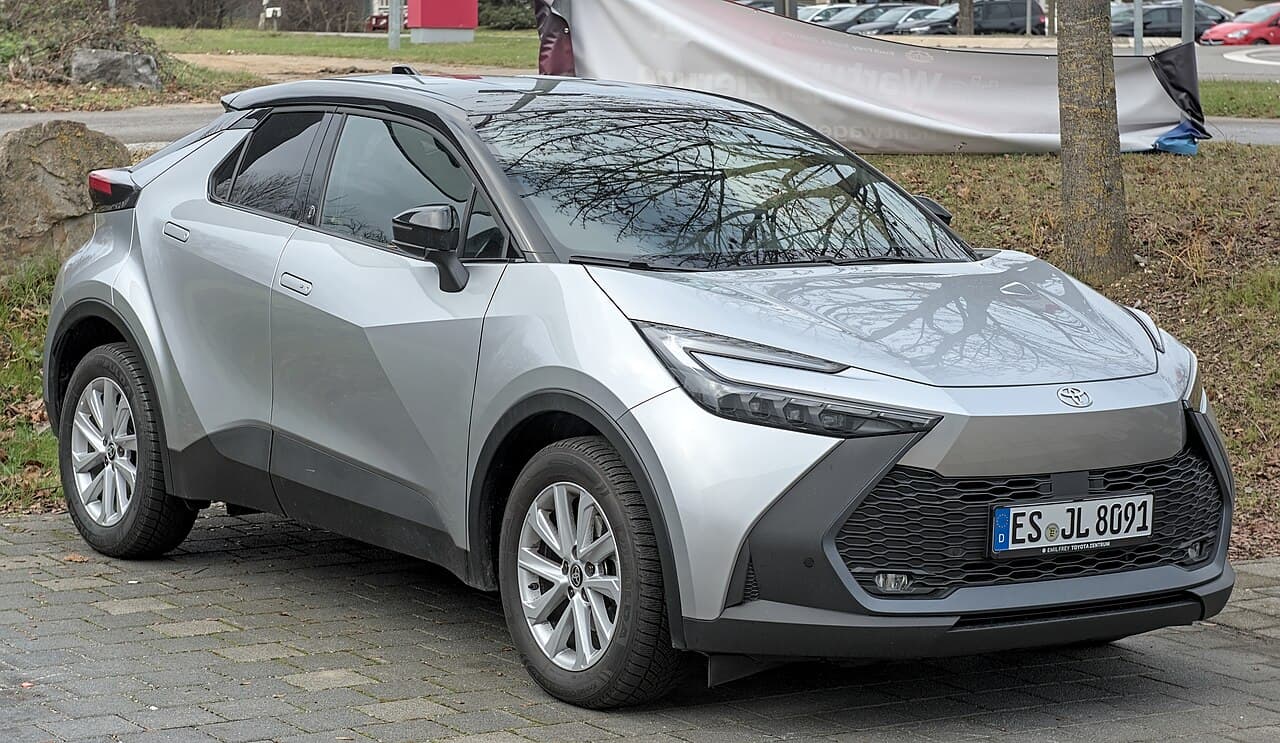
Discovering the 2026 Toyota C-HR Model
The 2026 Toyota C-HR emerges as a key player in Toyota's expanding electric vehicle (EV) lineup, designed to attract a broad range of eco-conscious consumers. This stylish crossover SUV boasts a dynamic, angular design that harmonizes aesthetics with aerodynamics—meeting the expectations of modern urban drivers.
Outfitted with advanced performance features, the C-HR ensures a smooth and responsive driving experience, thanks to its powerful electric powertrain. An efficient battery system provides extensive range capabilities, making it ideal for both everyday commutes and weekend getaways. Inside, the vehicle offers a spacious and flexible interior, catering to individuals and small families who value practicality alongside style.
Aiming to attract young professionals and environmentally conscious individuals, the C-HR integrates seamless connectivity and the latest technology, empowering drivers to remain engaged and in control. This model isn’t merely an alternative; it’s a solution for those wanting to embrace sustainable living without compromising on convenience or flair. With the C-HR, Toyota underlines its commitment to innovation while addressing the diverse needs of clients in the fast-evolving EV marketplace.
Battery technology remains one of the most important factors shaping the future of electric vehicles. Toyota has invested heavily in battery research to improve driving range, charging performance, cost efficiency, and sustainability.
Next-Generation Battery Development
Toyota has been exploring advanced battery technologies, including improvements in lithium-ion batteries and next-generation solid-state batteries.
Potential advantages of future battery technologies include:
- Higher energy density
- Longer driving range
- Faster charging capability
- Improved durability
Solid-state batteries are considered one of the most promising developments in EV technology because they may overcome some limitations of current lithium-ion systems.
Improving EV Manufacturing Efficiency
Beyond vehicle technology, Toyota is also focusing on improving EV production processes. Manufacturing efficiency plays a critical role in reducing vehicle costs and increasing the availability of electric models.
Future EV production strategies may include:
- More efficient factory operations
- Advanced manufacturing technologies
- Optimized battery production
- Improved supply chain management
These developments are essential as automakers compete to make electric vehicles more accessible to global consumers.
Toyota’s approach differs from companies that have focused primarily on battery electric vehicles.
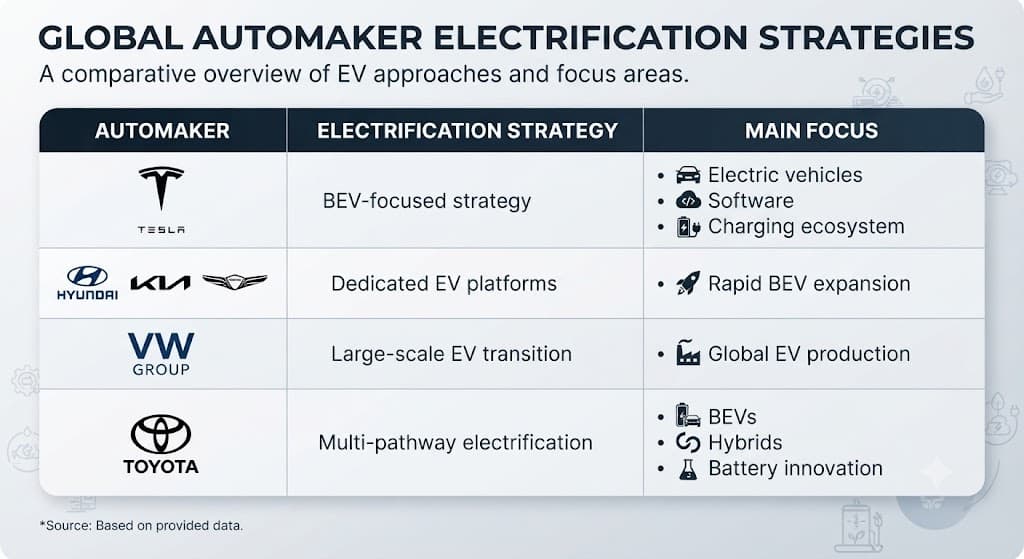
Toyota’s strategy reflects its belief that different regions will transition to electric mobility at different speeds. While BEVs are expected to become increasingly important, Toyota continues to view hybrids and plug-in hybrids as important technologies during the global transition period.
Charging availability remains one of the biggest factors influencing EV adoption. As electric vehicle markets expand, improvements in public charging networks and home charging solutions are becoming increasingly important.
Toyota has been working toward improving EV ownership experiences through:
- Expanded charging compatibility
- Connected vehicle services
- Battery management technologies
- Long-term reliability improvements
For many consumers, the decision to adopt an EV depends not only on vehicle performance but also on charging convenience, ownership costs, and battery confidence.
Toyota’s electric mobility strategy reflects a broader transformation happening across the automotive industry. Instead of focusing exclusively on one technology, Toyota is developing a diversified electrification approach that includes battery electric vehicles, hybrids, plug-in hybrids, and future battery solutions.
As EV competition intensifies, Toyota’s success will depend on how effectively it balances its hybrid expertise with the growing demand for fully electric transportation. Continued investment in batteries, manufacturing innovation, and electric vehicle platforms will determine Toyota’s role in the next generation of mobility.
The future of transportation is becoming increasingly electric, and Toyota’s evolving strategy demonstrates how traditional automakers are adapting to a rapidly changing automotive landscape.
Related Posts
Chinese Electric Vehicles How China Is Reshaping the Global EV Market
Sedan or SUV What You Need to Know Before Deciding in 2026

OBD2 Scanners Explained How To Diagnose Your Car Using Your Phone
Toyota Corolla 2026 Review Is It Actually Worth Buying for Budget Buyers?

Best Tire Inflators for Cars Portable Air Compressor Review Guide for 2026